
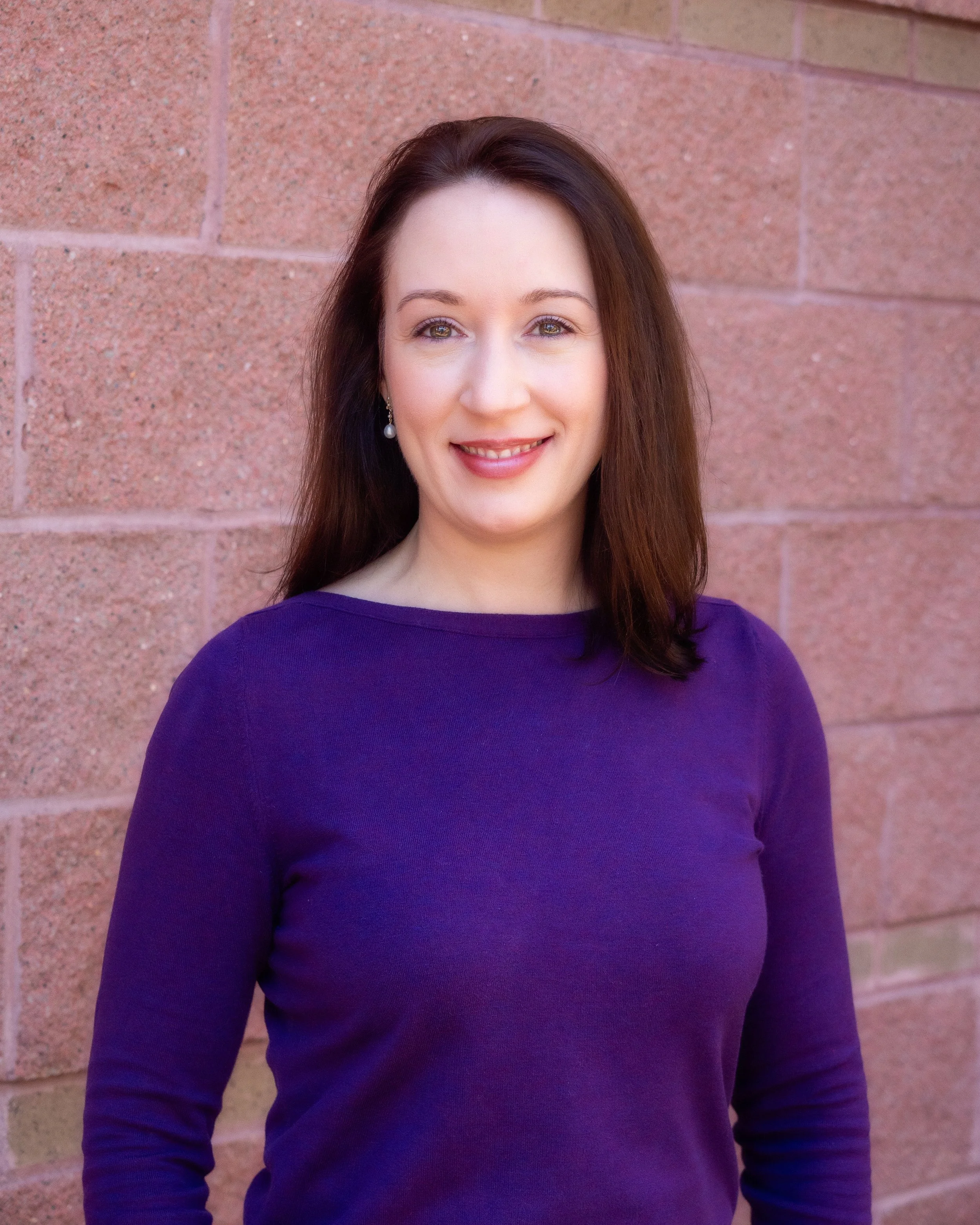
Caty Coffey
MAMFTC, LPC
Therapist for Complex Trauma, Anxiety, and Relationships in Jackson, Mississippi
“I know this doesn’t make sense, but…”
I hear some version of that sentence all the time.
Maybe you know you’re overreacting. You’ve told yourself to stop overreacting. Strangely enough, this has not made you stop overreacting.
Maybe you’re tired of getting hijacked by fight-or-flight mode.
Maybe your mom is driving you insane.
Maybe something from your childhood keeps showing up in your adult life, and you’re finally ready to deal with it.
Or maybe life just feels like too much, and you’re tired of feeling like you should be handling it better.
People make more sense than they think they do.
I’m Caty Coffey, a Licensed Professional Counselor in Jackson, Mississippi, with more than 20 years of clinical experience. A big part of what I do is help people understand the thoughts, emotions, physical reactions, relationship patterns, and old wounds that have left them wondering, Why am I like this?
We get curious. We connect the dots. We put language around things that have been hard to explain. Eventually, what felt like a jumbled mess starts to make sense.
That matters because there’s a big difference between I’m crazy and there’s a reason I respond this way.
Understanding doesn’t mean you’re stuck with it. Quite the opposite.
Once something makes sense, we have somewhere to go.
Bring the mess. We’ll make sense of it together.
Issues I frequently work with
I provide individual counseling for teens and adults ages 15 and older, as well as marriage, couples, and family counseling. I frequently work with clients experiencing:
Complex trauma and trauma
Anxiety and emotional overwhelm
Relationship problems and family conflict
Depression
Life transitions and stress
Grief and loss
Boundary and family-of-origin issues
Personal growth
Eating disorders and disordered eating
Personality disorders
I also provide marriage and premarital counseling for couples experiencing communication problems, repetitive conflict, emotional disconnection, attachment injuries, and other relationship concerns.
Understanding is important. Change is the goal.
Don’t get me wrong. I like coping skills.
Sometimes you need to calm your body, get grounded, set a boundary, communicate differently, or make it through a really hard Tuesday without completely losing your mind. Those are useful skills.
But I don’t want to stop there.
I want to understand why this keeps happening in the first place.
Why does one conversation with your mother ruin the rest of your day? Why do you feel guilty when you haven’t done anything wrong? Why does something that happened years ago still feel like it’s happening now? Why do you keep repeating a relationship pattern you consciously know you don’t want?
I’m probably not the therapist for someone who wants surface-level advice or wants me to tell them how to live their life.
I am a good fit for someone who wants to understand what’s underneath the problem, heal what needs healing, unlearn unhealthy patterns, and learn healthier ways of navigating emotions, relationships, and life.
The goal is freedom in the present, not permanent residence in the past.
Complex trauma, anxiety, and emotional overwhelm
Trauma doesn’t always look the way people expect.
Sometimes trauma looks like growing up walking on eggshells. Sometimes you learned to be the responsible one, keep the peace, or make sure you didn’t need too much. Maybe you became exceptionally good at reading everyone else in the room while paying very little attention to what was happening inside of you.
Maybe nothing in your history seems “bad enough” to explain why you feel the way you do now, but something still isn’t adding up.
You understand intellectually that you’re safe, but your body is acting like a bear just walked into the room. You know you don’t need everyone’s approval, but disappointing someone still makes you feel slightly nauseated. You know your spouse isn’t your parent, but sometimes your nervous system appears unconvinced.
This is why I look at how your whole mind-body system is functioning. I want to understand how your history, relationships, thoughts, emotions, brain, and body are working together.
Depending on what you need, our work may include somatic practices, polyvagal theory, parts work, mindfulness, family systems, and psychoeducation about what’s happening in your brain and nervous system.
Understanding why your mind and body respond the way they do can take a tremendous amount of shame out of the equation. Then we can work on helping your system develop a healthier way to respond.
The goal isn’t to stop having big feelings. It’s to be able to have them without either stuffing them or getting swept away by them.
Relationship problems, family patterns, and boundaries
Relationships have an impressive ability to turn a perfectly competent adult into a frustrated 12-year-old in approximately 30 seconds.
Maybe you struggle to set boundaries because saying no feels mean. Maybe you take responsibility for other people’s feelings. Maybe you keep getting hurt by someone you love, but you don’t know how to protect yourself without losing the relationship.
Or maybe you’ve started realizing that some of the patterns you learned growing up aren’t patterns you want to keep.
We can look at why certain relationships affect you so deeply, what belongs to you and what doesn’t, and what you want to do differently.
Sometimes that means setting boundaries. Sometimes it means tolerating someone else’s disappointment. Sometimes it means grieving the relationship you wish you had. Sometimes it means changing your part of a pattern even if the other person never changes theirs.
You can’t control everyone else.
Bummer, I know.
But you may have a lot more influence over your own life and relationships than it feels like you do right now.
Marriage and couples counseling: The fight usually isn’t about the fight.
Have you ever had the same fight with your spouse 100 times?
The subject changes, but somehow you both know the script. One person says the thing, the other reacts, someone gets defensive, and someone gets louder or shuts down. Before long, you’re not even arguing about what started the argument. Now you’re fighting about the fight.
Couples often come to therapy believing they have a communication problem. They usually do, but I also want to know what’s happening underneath it.
Do you feel heard? Do you feel important to one another? What happens when one of you feels criticized, rejected, ignored, or controlled? What did each of you learn about relationships before you ever met one another?
I have completed Level 3 training in the Gottman Method, and I work with couples experiencing repetitive conflict, communication problems, emotional disconnection, attachment injuries, and premarital concerns.
I especially enjoy working with couples who want more than a marriage that simply survives. They’re willing to get curious about the cycle between them, take responsibility for their own part, learn and practice new skills, and stop repeating unhealthy patterns they may have inherited from their families.
I love helping couples become cycle-breakers so they can build something healthier together.
Christian counseling, if you want faith to be part of therapy
My Christian faith is part of how I understand people, relationships, suffering, dignity, responsibility, grace, healing, and hope.
If you want your Christian faith to be part of counseling, we can talk about it. We can talk about God, Scripture, prayer, doubt, shame, painful church experiences, and the ways your faith intersects with what is happening emotionally and relationally.
We can also talk about the thought, I’m a Christian. Shouldn’t I be handling this better?
I’m a licensed mental health professional, not a biblical counselor. I don’t use Scripture as a substitute for psychology, neuroscience, trauma research, or clinical treatment. Instead, I understand psychological knowledge through the lens of my Christian worldview, and I love integrating faith into therapy when my clients want it.
I also work with people of other faiths and people with no faith at all. You don’t have to believe what I believe to work with me, and I won’t impose my beliefs on you. I’ll meet you where you are.
What’s it actually like to work with me?
I take therapy seriously, but that doesn’t mean we have to be serious all the time.
I’m not going to sit silently and nod at you for 55 minutes, but I’m also not going to tell you how to live your life. I ask a lot of questions, I explain things, and I help you notice connections that may have been hard to see when you were in the middle of them.
I also laugh and joke with my clients. Sometimes we’ll talk about something really painful, and sometimes we’ll laugh about the absurdity of being human. Sometimes both will happen in the same session.
Curiosity is a big part of how I work. Instead of asking, What is wrong with me?, we can ask a much more useful question:
What is happening here?
That shift lets us look honestly at patterns that may need to change without piling more shame on top of them. From there, we can figure out what you want to do about it.
Experience, education, and training
I double-majored in music and psychology at Florida State University. I earned my Master of Arts in Marriage and Family Therapy and Counseling from Reformed Theological Seminary in 2006.
I’m a Licensed Professional Counselor (LPC) in Mississippi and a Licensed Mental Health Counselor (LMHC) in Florida.
My training and clinical approach include:
Level 3 training in the Gottman Method
Advanced education in complex trauma, including completion of the educational requirements associated with the Clinical Complex Trauma Professional (CCTP) credential
Somatic and nervous-system-informed approaches
Polyvagal theory and parts work
Family systems and mindfulness
Advanced eating-disorder education, including completion of the educational coursework required by the International Association of Eating Disorders Professionals (IAEDP) for the Certified Eating Disorders Specialist credential
A little about me
I’m originally from Chattanooga, Tennessee, and I’ve called Mississippi home since 2009. I’ve been married since 2003, and outside the office, I enjoy singing, hiking, and traveling.
Request an appointment with Caty
I meet with clients in-person therapy in Jackson, Mississippi and telehealth therapy for clients located throughout Mississippi and Florida.
Office: Watershed Counseling, 1755 Lelia Drive, Suite 201, Jackson, MS 39216
Sessions: 55 minutes
Self-pay: $175
Insurance: Blue Cross Blue Shield and Aetna
To request an appointment with me, complete our online appointment request and select Caty Coffey from the provider dropdown. Our Client Care Coordinator will contact you to schedule your first appointment.
You can also call Watershed Counseling at 601-362-7020.
You don’t have to figure it all out before you come in.
Bring the mess. We’ll make sense of it together.